
This week, the CyLTV programme El Arcón (Season 13, Episode 46, aired July 25) devoted its airtime to a project that's about to change the way people visit Burgos province: Ars Museorum. You can watch the full segment here (Spanish-language regional TV):
Report by El Arcón (CyLTV), July 25, 2026.
If you've found your way here already knowing the Merchants' Route, this news matters to you in particular, because both projects share far more than the name of the foundation behind them. Let's walk you through what Ars Museorum is, which churches it includes, and why the Altarpiece Museum — one of the three churches on our own route — has become the gateway to an entire country's worth of sacred art scattered across the province.
What Ars Museorum is
Ars Museorum is a digital and physical network connecting 17 churches across Burgos province, all of them officially protected as sites of Cultural Interest (BIC). The project is led by the Ars Burgensis Foundation, part of the Archdiocese of Burgos — the same organisation behind the Merchants' Route — in partnership with the Las Edades del Hombre Foundation.
Total investment stands at €324,000, 61% of it funded by the Regional Government of Castile and León. This is no small or improvised effort: it follows a year and a half of technical groundwork, built around a Master Plan specifically designed to bring value to religious heritage scattered across rural Burgos.
As Rodrigo Sáiz García, General Director of the Ars Burgensis Foundation, explained, the project's ambition goes well beyond tourism: opening a church, in his view, also opens up a development opportunity for the village that hosts it. That idea captures the underlying philosophy well: heritage as an engine for rural development, not just as an attraction for passing visitors.
Three routes, an entire province
Ars Museorum is organised into three major geographic itineraries — north, central and south — linking the 17 participating churches and spaces. The route mapped out in El Arcón's episode gives a good sense of the project's scope: from Valpuesta to San Pedro de Cardeña, from Silos to Caleruega, and from the Monastery of La Vid to Santa María la Real de Sasamón.
The full list of participating churches and museums spans the entire province: Medina de Pomar (home to the Santa Clara Museum), Valpuesta, Pancorbo, Oña — whose old Benedictine abbey of San Salvador served as one of the pilot projects — Covarrubias, Peñaranda de Duero, Gumiel de Izán, Caleruega, Santo Domingo de Silos, Santa María del Campo, Castrojeriz, Sasamón, Villadiego and the Monastery of La Vid, among others.
It is, in essence, a journey through centuries of religious, artistic and monastic history that reaches far beyond the capital.
A digital passport, in the spirit of the Compostela
One of the project's most striking features is its technological backbone. Ars Museorum plans to install interpretive content, 3D models and multilingual audioguides at each church, along with a "digital passport" system directly inspired by the traditional Compostela of the Camino de Santiago: every visit gets logged, encouraging travellers to complete the full collection of churches and heritage sites in the network.
This gamified approach to culture ties in directly with what you already know from the Merchants' Route: technology in service of a visual, intuitive experience, designed for every visitor regardless of how comfortable they are with digital tools. You can check the project's progress at arsmuseorum.es.
The Altarpiece Museum: where it all begins
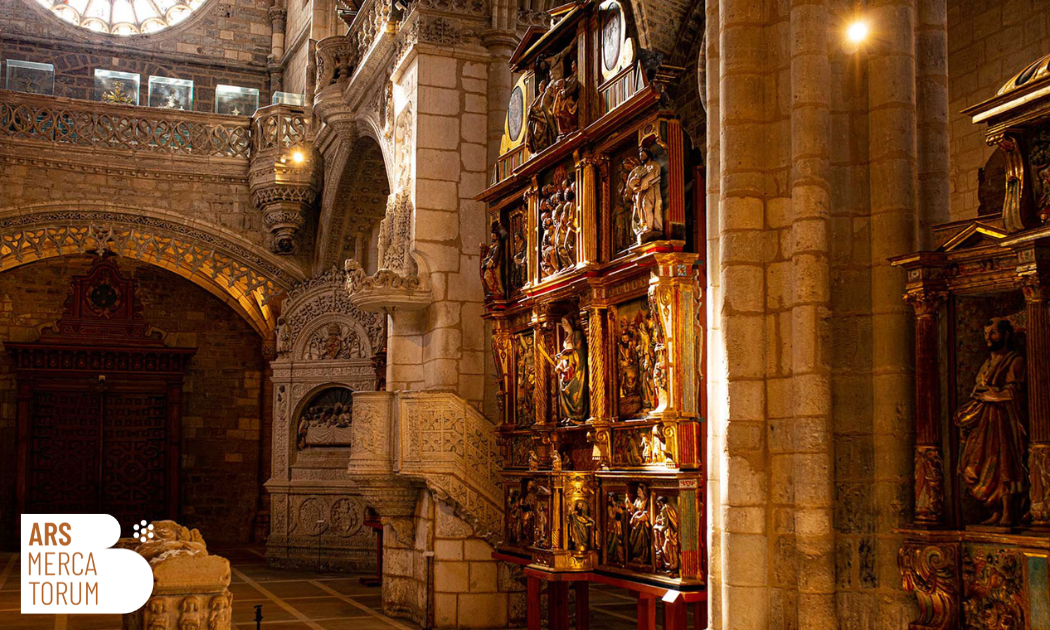
Here's the connection that matters most to us. The Altarpiece Museum, housed in the church of San Esteban in Burgos city, hosted the official presentation of Ars Museorum, and its promoters have pointed to it as the home of an initiative that aims, precisely, to connect the capital with the surrounding villages.
What's striking is that this same Altarpiece Museum is part of the combined ticket for all three churches on the Merchants' Route, alongside the churches of San Nicolás de Bari and San Gil Abad. In other words: anyone visiting the Merchants' Route in Burgos's historic centre today is already standing in the very space that serves as the reference point for the entire heritage network connecting the city to its surrounding villages.
That's no coincidence. It's the same Foundation, the same vision, and — increasingly — the same story: Burgos city as the gateway to a heritage that stretches, without interruption, across the rest of the province.
According to the synopsis of the El Arcón episode, the programme also interviews Father Antonio García, who heads the Altarpiece Museum, described as "the starting point of the three routes through the churches."
Why this matters even if you already know the Merchants' Route
If you've already walked — or are planning to walk — the Merchants' Route, Ars Museorum adds an extra layer to your visit. By buying the combined ticket for all three churches, you're walking through the very same door that gives digital access to treasures like:
- Valpuesta, cradle of written Castilian.
- Santo Domingo de Silos, home to its world-famous Romanesque cloister.
- Caleruega, birthplace of Saint Dominic of Guzmán.
- Covarrubias, one of the region's best-preserved historic towns.
- Peñaranda de Duero, with its arcaded square and castle.
- The Monastery of La Vid, in the south of the province.
- The old abbey of San Salvador de Oña, the network's pilot project in the north.
All of these sites, protected as Cultural Interest heritage, belong to the same strategy you already know from the Merchants' Route: rescuing world-class heritage that had spent far too long going unnoticed.
One number that explains it all
Burgos province welcomed 930,000 religious tourism visitors in 2024, according to figures handled by the Ars Burgensis Foundation itself. That number confirms exactly what Ars Museorum and the Merchants' Route have set out to organise and amplify: there's real demand for religious and cultural heritage that, until now, lacked a unified story, digital infrastructure and a joined-up strategy.
How to get started: from the city to the province
- Start in Burgos city with the Merchants' Route combined ticket (€7), visiting San Nicolás de Bari, San Gil Abad and the Altarpiece Museum.
- At the Altarpiece Museum, pay close attention to the Ars Museorum content: this is where the digital journey toward the province's 17 churches begins.
- Plan your route through the province following one of the three geographic itineraries — north, central or south — based on your time and interests.
- Check arsmuseorum.es to see the digitisation status of each church.
From the merchants' golden mile to the most remote monasteries of Las Merindades or the Duero riverbank: all of Burgos is starting to be told as a single story.