
Museum of the Altarpiece.
The temple that saved the soul of the forgotten towns of Burgos.
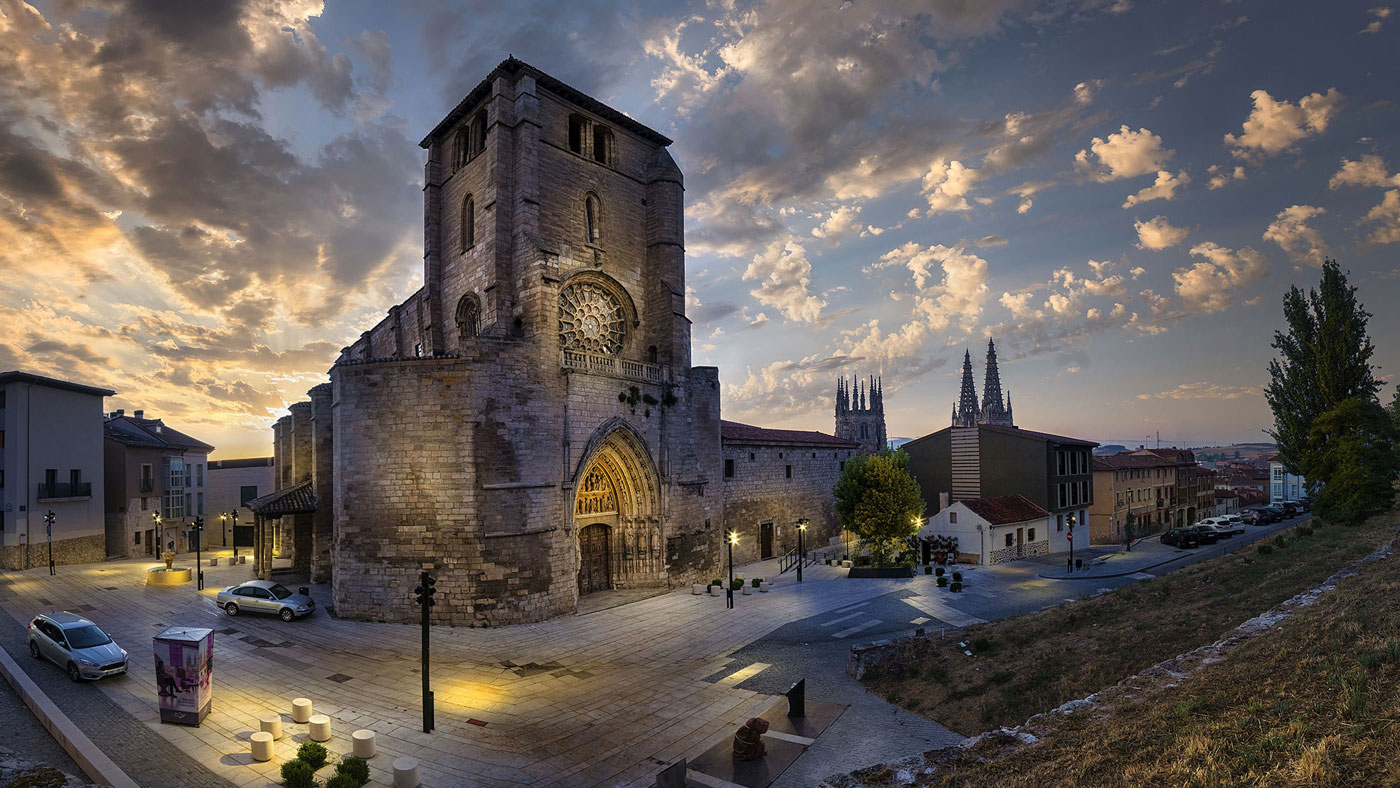
There are places born out of an urgency. The Museum of the Altarpiece in Burgos was not created to display wealth, but to rescue the wealth of hundreds of rural churches that depopulation threatened to wipe off the map. In the incomparable setting of the Church of San Esteban—a 13th and 14th-century Gothic building that is well worth a detour in itself—the Archdiocese of Burgos gathered what oblivion was about to destroy: more than 30 restored altarpieces, sculptures, goldsmithing, and sacred painting spanning from the 10th to the 19th century.
The result is something that does not exist anywhere else in Spain.
The origin: a diocese with more than 1,000 churches.
The diocese of Burgos is the richest in religious heritage in all of Castile and León. More than a thousand churches, almost five hundred hermitages, monasteries scattered across a vast geography. For centuries, every town had its temple, and every temple had its altarpiece. But when the towns emptied, the temples were left alone, exposed to looting, dampness, and collapse.
Ante esa pérdida silenciosa, la Iglesia de Burgos tomó una decisión: rescatar lo que aún se podía salvar, restaurarlo y devolverlo a la vida en un espacio donde cualquiera pudiera contemplarlo. El lugar elegido fue la Iglesia de San Esteban, un templo gótico del siglo XIII encaramado en la ladera del Castillo, con una portada que guarda afinidades directas con la Coronería de la Catedral, un rosetón con vidrieras del siglo XVI y un interior con obras de Simón de Colonia.
What you will find.
An unparalleled collection of altarpieces in Spain.
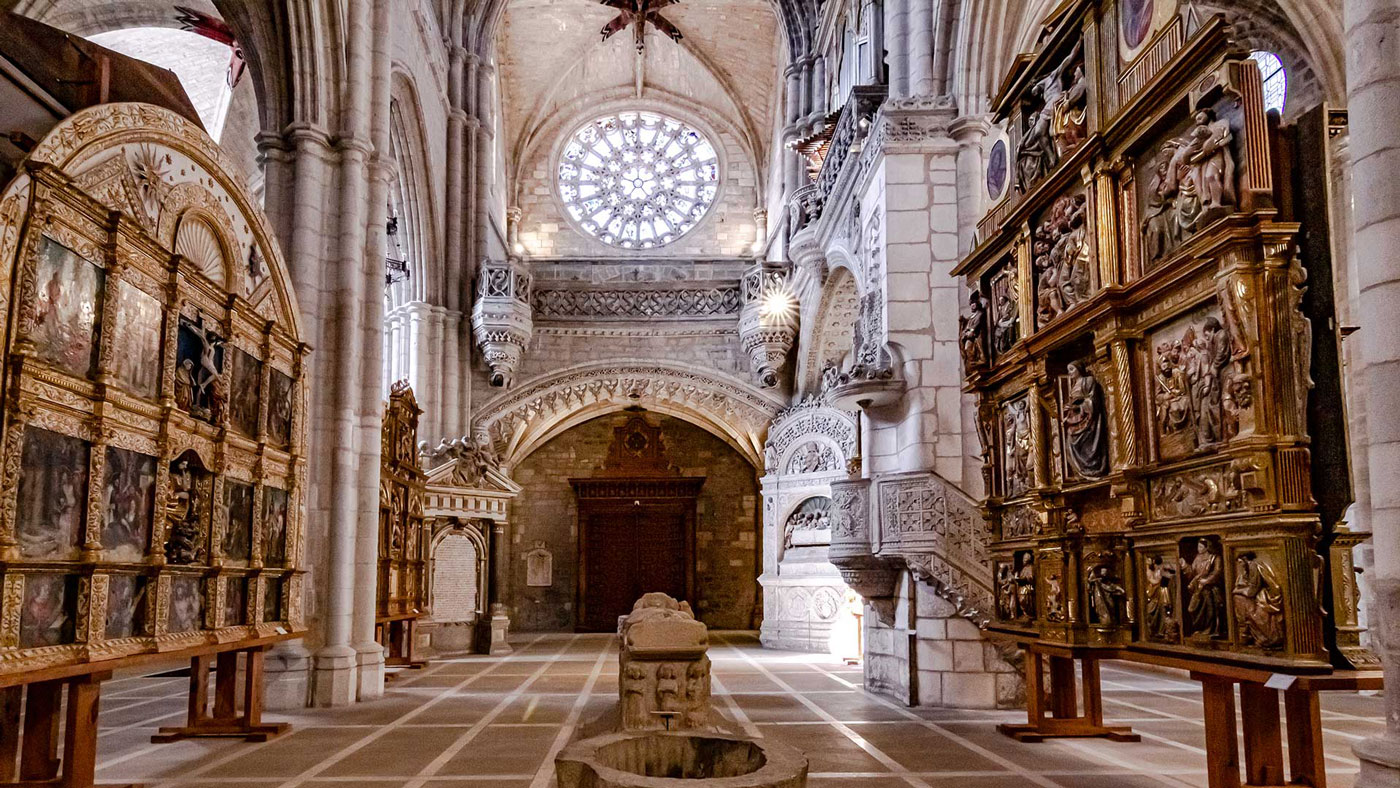
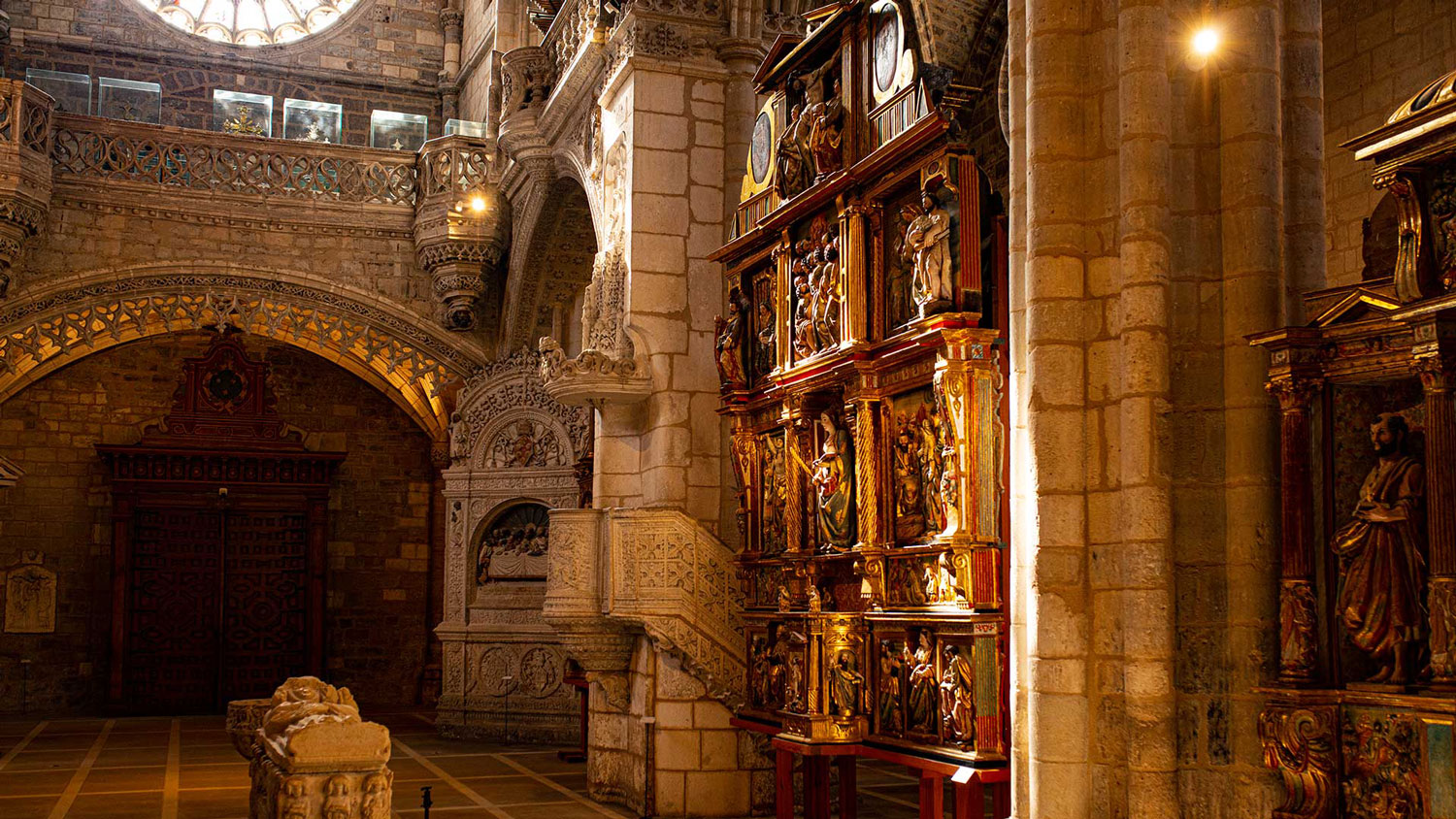
Thirty altarpieces from all periods and styles coexist in the naves of San Esteban. Gothic, Renaissance, Baroque, Neoclassical. Each has its history: where it came from, to which saint it was dedicated, to which family or parish it belonged. Here they are not museum pieces in the cold sense of the term; they are objects that were the spiritual center of entire communities, witnessing births, weddings, and funerals for centuries.
Among the most notable: the Altarpiece of the Kings (16th century), the Altarpiece of San Millán de la Cogolla (15th and 18th centuries), the Altarpiece of the Risen Christ (1656), and the magnificent Painting-Altarpiece of the Last Supper (16th-17th centuries).
Goldsmithing from the 10th to the 18th century.
More than thirty pieces of sacred goldsmithing spanning almost ten centuries of religious craftsmanship. Chalices, monstrances, and reliquaries that would never have reached any conventional museum because they belonged to parishes of three or four houses in the mountains.
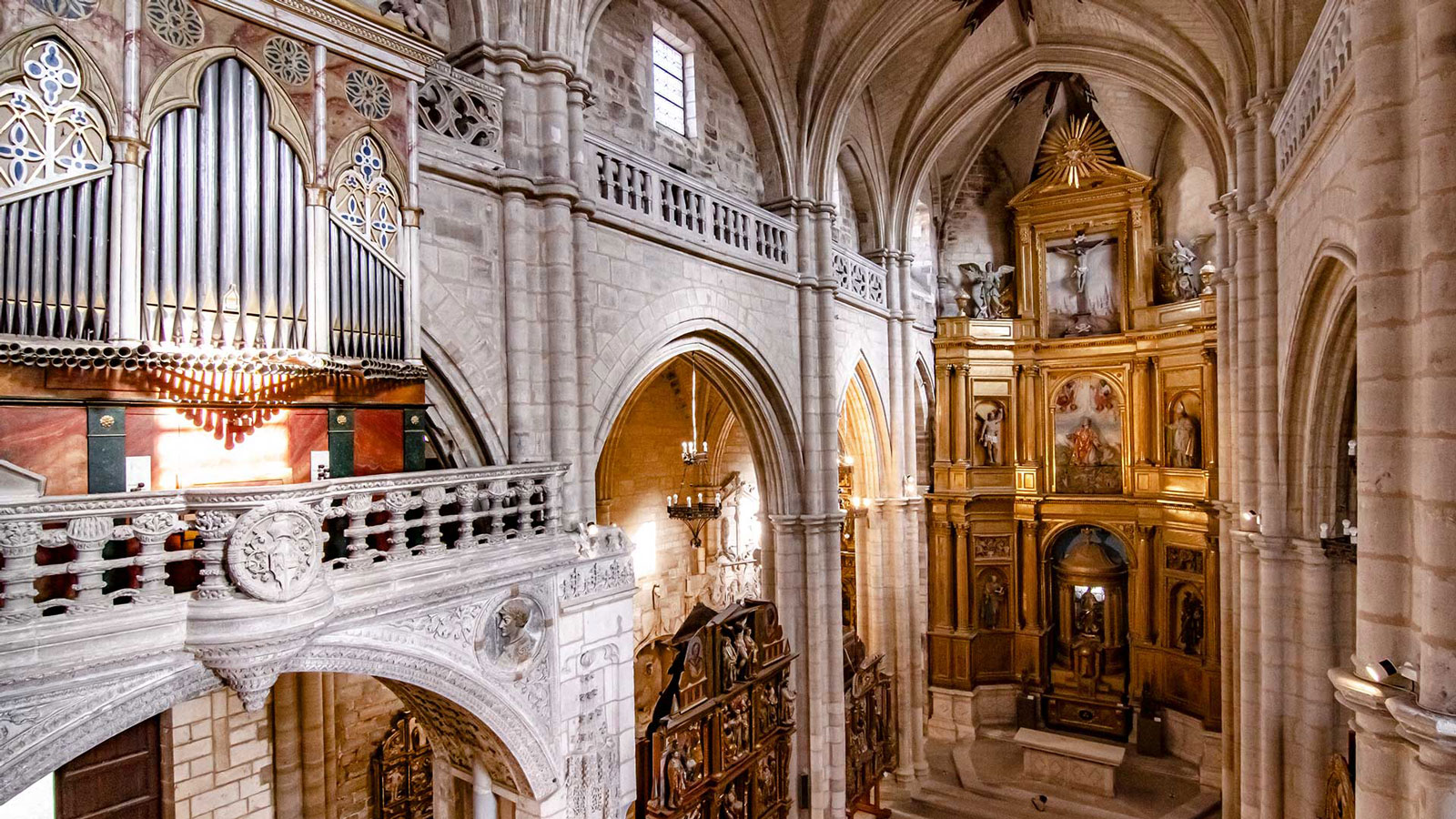
El templo de San Esteban, una obra de arte en sí mismo.
Entrar ya es un privilegio. La nave central con sus bóvedas de crucería, el coro de Simón de Colonia (1502) con su gótico florido, la decoración plateresca de Nicolás de Vergara entre 1514 y 1519, el claustro con la Capilla de Todos los Santos y sus arcosolios funerarios medievales. El museo está dentro del monumento, no al margen de él.
Why visit the Museum of the Altarpiece.
Because it is the only way to see gathered in a single space what for centuries was scattered across hundreds of towns in the province. Because the building that houses it is worth the visit on its own. And because what is preserved here would not have survived without this place.
Discover the museum that saved the heritage of an entire province!
Visit conditions
Price: 4€ Reduced Fare: 3€
JOINT TICKET: 3 temples: 7 € | 2 temples: 6 €
Tuesday afternoon: free for everyone
HOURS:
Summer (March 19 – Oct 31): 10:00–14:00 and 17:00–20:00
Winter (Nov 1 – March 18): 10:00–14:00 and 16:00–19:00
Museo del Retablo
C/ San Esteban, s/n, Burgos