
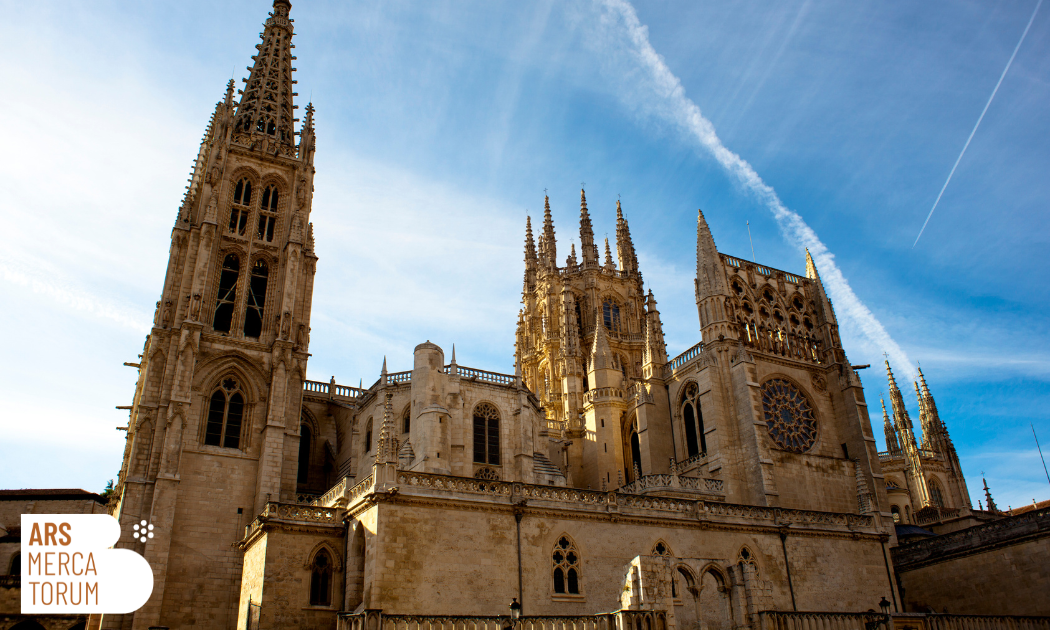
Burgos Cathedral is, rightly so, the city's essential visit. A UNESCO World Heritage Site since 1984, with eight centuries of history and one of Europe's most admired Gothic façades. No one travelling to Burgos should skip it.
But if you've already visited it — or if you're looking for alternatives to Burgos Cathedral to round out your trip without repeating the same kind of experience — the city holds an entire other chapter of its history that very few tourists ever discover: the Burgos of merchants, Renaissance palaces and royal monasteries that made this city one of the wealthiest in medieval Castile.
This article walks you through the other options Burgos has to offer, without taking anything away from the Cathedral — simply widening the map.
How much the Cathedral costs (and why it's worth looking for something more)
First, a useful fact: as of April 21, 2026, the general admission ticket to Burgos Cathedral costs €11, according to the official Cathedral website. Reduced rates are available (€10 for groups and over-65s, €6 for pilgrims with a credential, €5 for people with disabilities, large families or the unemployed), and there's limited free access on Tuesdays from 9:30 to 11:25 AM, on a first-come basis with no advance booking.
It's a price justified by the sheer scale of the monument. But it also means that, if you want to dig deeper into Burgos's history without repeating your budget or the same kind of visit, it's worth knowing what else is out there.
The Merchants' Route: the Burgos the Cathedral doesn't tell you about
Less than a kilometre from the Cathedral, up Calle Fernán González, lies the Merchants' Route: a walk through three churches that tell a different story from the Cathedral's. Not the story of bishops and kings, but that of the great Burgos merchants who, through the international wool trade, financed an artistic heritage that remains largely unknown today.
The Church of San Nicolás de Bari houses a main altarpiece carved in stone — not wood, as was customary — with 464 meticulously sculpted figures. Alongside it, Spain's most important parish tapestry collection, woven in Flanders in the 16th and 17th centuries.
The Church of San Gil Abad is the great pantheon of the Burgos merchant class, with funerary chapels that speak of faith and social status, and the haunting Christ of the Holy Drops, before which Philip II reportedly uttered words that have gone down in history.
And the Altarpiece Museum, in the church of San Esteban, completes the route with a collection of restored altarpieces from different periods.
The combined ticket for all three churches costs €7, with continuous opening hours from 11:30 AM to 7:00 PM, Monday to Sunday. Less than half the price of general admission to the Cathedral, for an entirely different historical narrative.
Other Burgos monuments worth visiting
Beyond the Merchants' Route, Burgos city offers other solid alternatives if you want to keep exploring its heritage:
Monastery of Las Huelgas. Founded by Alfonso VIII and Eleanor of England in the late 12th century, this Cistercian monastery served for centuries as the pantheon of Castilian royalty. Its Romanesque cloister and chapels preserve a medieval textile heritage of great value.
Miraflores Charterhouse (Cartuja de Miraflores). A former royal leisure palace turned Carthusian monastery, it houses the mausoleum of the Catholic Monarchs and their parents, John II of Castile and Isabella of Portugal. It's still home to a community of Carthusian monks, lending it a contemplative character unlike any other visit in the city.
Museum of Human Evolution (MEH). Located right in the city centre, a few steps from the Cathedral, it displays original finds from the Atapuerca archaeological sites, just 15 km away. A perfect alternative if you're after something completely different from sacred art: here, prehistory takes centre stage.
Arco de Santa María. One of the historic gates of the medieval city wall, now converted into a temporary exhibition space. Ideal for a short stop between visits.
And if you want to go beyond the city: Ars Museorum
If, after touring Burgos city, you still want more, the province holds an enormous heritage spread across villages and monasteries: Covarrubias, Santo Domingo de Silos, Peñaranda de Duero and the Monastery of La Vid, among many others. The Ars Burgensis Foundation — the same organisation behind the Merchants' Route — recently launched Ars Museorum, a network of 17 museum-ified churches across the province. If you're interested, you can read our dedicated article about this project on our blog.
Quick price comparison
- Burgos Cathedral (general admission): €11
- Merchants' Route (3 churches, combined ticket): €7
- Museum of Human Evolution: check rates on its official website
- Monastery of Las Huelgas and Miraflores Charterhouse: check current rates on their respective official websites
Note: prices for monuments we don't directly manage may change without notice; we recommend always verifying them on the official source before your visit.
A one-day itinerary to see it all without rushing
If you have a full day in Burgos, this order makes the best use of your time and distances:
- Morning: Burgos Cathedral (book ahead, especially during peak season).
- Mid-morning: Merchants' Route, walking up Calle Fernán González — less than a 10-minute walk from the Cathedral.
- Lunch: in the old town, around Calle San Lorenzo or the Sombrerería area.
- Afternoon: Museum of Human Evolution or Monastery of Las Huelgas, depending on your interest — prehistory or medieval history.
- If you have a second day: Miraflores Charterhouse and, time permitting, a side trip to Covarrubias or Santo Domingo de Silos.
Burgos doesn't run out at its Cathedral. At most, it runs out at the time you give it.