
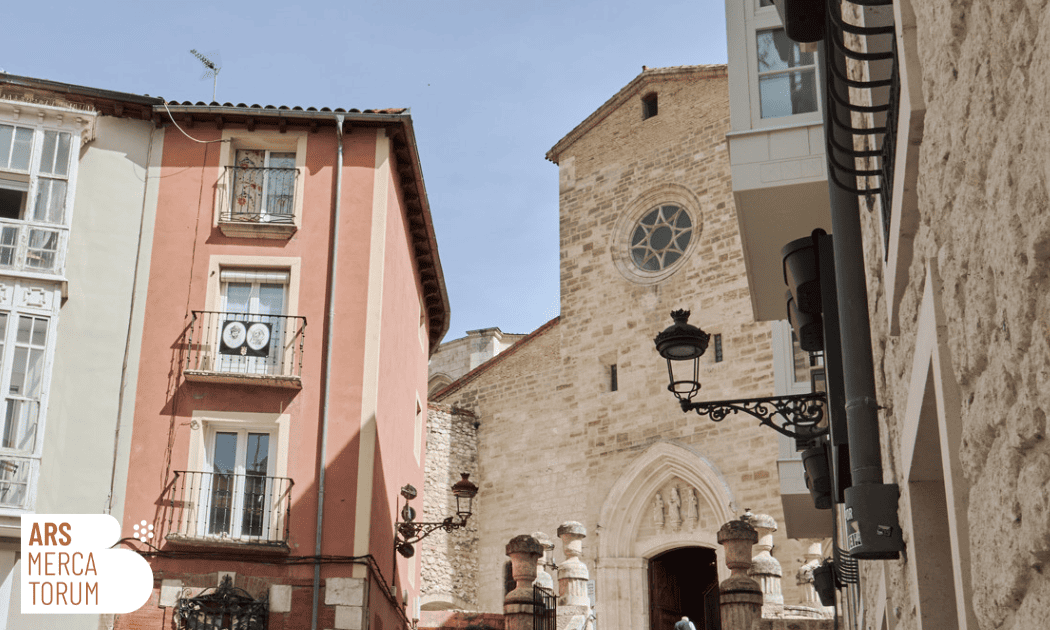
Quick answer: Very near Burgos Cathedral, just a 5-minute walk along Calle Fernán González, stand three monuments that almost no one visits: the Church of San Nicolás de Bari, the Church of San Gil Abad, and the Retable Museum (the former Church of San Esteban). Together they form the Route of the Merchants, the itinerary that follows the old "golden mile" where the merchants who turned Burgos into one of Europe's economic capitals in the 15th and 16th centuries once lived. All three can be visited with a single combined ticket from €6, adding less than an hour to your visit to the Cathedral.
Why 90% of Cathedral Visitors Miss It
Burgos Cathedral, a UNESCO World Heritage Site since 1984, understandably draws nearly all the tourist attention in the historic centre — it's one of the masterpieces of European Gothic architecture. But that same spotlight means that, right near Burgos Cathedral, other churches of a similarly extraordinary artistic level go completely unnoticed.
The parish priest of San Nicolás and San Gil summed it up when the Ars Mercatorum project was presented: ask a hundred visitors leaving the Cathedral whether they know about the Flemish tapestry collection in the church right next door, and almost all of them will say no. It isn't a lack of interest — it's a lack of visibility. Nobody tells them it's right there.
The Golden Mile, Near Burgos Cathedral
The whole route fits within less than a kilometre, along Calle Fernán González, the old "golden mile" of Burgos. Here's what you'll find near Burgos Cathedral, and exactly how far each stop really is:
| Monument | Distance from the Cathedral | Visit time | Individual ticket |
|---|---|---|---|
| Church of San Nicolás de Bari | ~2-minute walk | 15-20 minutes | €4 |
| Retable Museum (San Esteban) | ~5-minute walk | 20-25 minutes | €4 |
| Church of San Gil Abad | ~6-minute walk | 15-20 minutes | €4 |
| Golden Staircase, Casa del Cubo, Castilfalé Palace and the Palace of the Four Towers | Along the same route (exteriors) | 10 minutes | Free (exterior visit) |
In total, in under an hour you can complete a route covering 2 churches, 1 museum, and several 15th- and 16th-century civil buildings, all without leaving the immediate surroundings of the Cathedral.
What You'll Find at Each Stop
Church of San Nicolás de Bari
Just steps from the Cathedral and funded by the Polanco merchant family, this church holds one of the most striking altarpieces of Spanish late Gothic art: a monumental stone carving made from Hontoria limestone — the same quarry that supplied the Cathedral itself — featuring more than 460 sculpted figures. The church also preserves a collection of Flemish tapestries, direct evidence of the wool trade that once linked Burgos with Flanders.
Retable Museum
Housed in the former Church of San Esteban, this museum brings together a significant collection of restored altarpieces from different periods in a space designed as a museum rather than an active church. It's the ideal stop for anyone who wants to grasp the evolution of Burgos's religious art at a glance, without visiting several churches separately.
Church of San Gil Abad
Known as the church of merchants and pilgrims, it is literally built into the city's medieval walls. Inside, its funerary chapels stand out for their artistic richness, with altarpieces and tombs created by some of the same artists who worked on the Cathedral.
Civil Heritage: Palaces and the Golden Staircase
The route also includes civil buildings that can be seen from the outside at no cost: the Golden Staircase by Diego de Siloé (inside the Cathedral itself, but designed to connect with civic life on the street), the Castilfalé Palace — built for the merchant Nicolás de Gauna —, Casa del Cubo, and the Palace of the Four Towers, the former residence of the Cartagena family. Together, these buildings show how the wealth generated by Burgos's merchant families translated directly into the architecture that still defines the historic centre today, standing as evidence of a prosperity built on wool, international trade, and the pilgrim routes that once passed through the city.
How Much It Costs and How to Buy Tickets
Each church or museum can be visited separately for €4, but the most practical — and most affordable — option is the combined ticket, which also includes access to the route's multimedia content through the free official app:
- 2 churches: €6
- 3 churches (San Nicolás + San Gil + Retable Museum): €7
Tickets can be bought online in advance on the official website, which helps you avoid queues during peak season. The route's app — available on iOS and Android — works as a complete visual guide throughout the visit, with contextual information at every stop.
When to Visit
The best time to explore what's near Burgos Cathedral without rushing is between June and October, when the historic centre sees more visitors and opening hours are longer. Outside that window, it's worth checking updated opening times before planning your visit, as they can be reduced. If you're planning a trip to Burgos in the coming months, now is the moment to add the route to your itinerary, before the high season ends.
Frequently Asked Questions
What can you visit near Burgos Cathedral in a short amount of time?
Yes — since everything sits within a 6-minute walking radius, it's entirely possible to visit the Cathedral in the morning and complete the Route of the Merchants, right near Burgos Cathedral, in under an extra hour, even on a single-day trip to Burgos.
How much does the combined ticket for the Route of the Merchants churches cost?
From €6 for 2 churches and €7 for all 3 churches (San Nicolás de Bari, San Gil Abad, and the Retable Museum), including access to the route's official guide app.
Do you need to book in advance?
It isn't required, but buying your ticket online in advance helps you avoid queues, especially between June and October, the busiest months.
What's the difference between the Cathedral and the churches on the Route of the Merchants?
The Cathedral is a large-scale episcopal church built under the patronage of the Church and the nobility. The churches on the Route of the Merchants, by contrast, were funded by Burgos merchant families, making them a unique testament to how the merchant middle class also shaped the city's religious art.
Already visited Burgos Cathedral? Don't leave without seeing what else is near Burgos Cathedral — the other side of medieval Burgos: the merchants who made it rich. Check updated opening hours and buy your combined ticket online.
Keep exploring Burgos: What to See in Burgos, the Complete Guide and More Alternatives to Burgos Cathedral (check the English versions of these guides on the blog, once published).